ASOCIAL GROUP RITUAL DYNAMICS
the social bypass of paratheatrical process
ASOCIAL GROUP RITUAL DYNAMICS
the social bypass of paratheatrical process
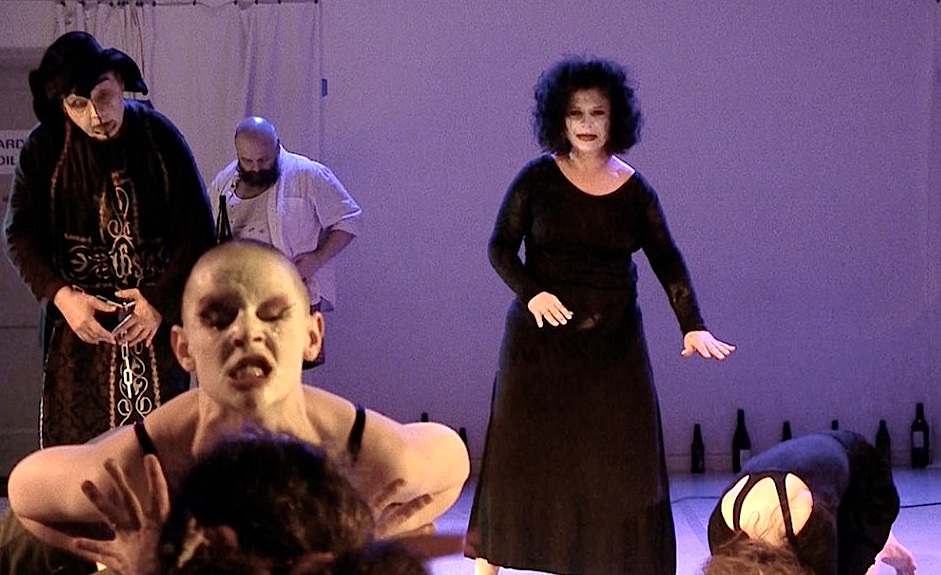
"Bardoville" performances in May 2017 Portland OR
Asocial Interplay, Spatial Awareness, Personal Safety
ASOCIAL INTERPLAY
“Asocial interplay" refers to a paratheatrical process of group interaction that is neither antisocial nor social but a third way of interacting without being socially hostile or socially-conforming. This asocial approach starts with realizing our non-responsibility to others in the workspace. This adjustment initiates a shift from being in a group to meet social needs -- approval, support, affection, acceptance, friendship, courtship, etc from others -- to being in a group for the work of accessing internal sources and their direct expression through movement, sound, gesture, action. This shift from the social to the asocial supports greater authenticity of expression and creative response.
SPACE-FORMING AND SPATIAL AWARENESS
An asocial climate can be initiated by any action that increases spatial awareness, such as the paratheatrical method of "space-forming". This starts with getting your attention off yourself and redirecting it onto the external space around, below, and above you. Once attention can be redirected onto the space itself, you begin moving through that space to discover ways of physically communicating your relationship with the space, moment to moments as you go. As this spatial awareness increases, so does awareness of the personal space around others - the immediate area, or auric field, surrounding each self-governing body. A mutual respect for personal space develops that supports a climate of safety in the group. When we feel more safe, we are more likely to take more risks, such as becoming more vulnerable and available to our internal sources and each other.
A VOW OF PERSONAL SAFETY
Paratheatrical work can trigger cathartic release, convulsive physical and emotional responses, and sudden loud vocalizations that can throw us and others off balance. In this work, everyone is asked to take a vow to become fully responsible for their own safety and well being. To be accountable for your own safety means whenever your sense of equilibrium is temporarily interrupted, you simply do your best to restore your sense of safety. You make yourself safe. This occurs as a trial-by-error process of experimentation. For example, perhaps you start jumping up and down to feel the soles of your feet to restore your sense of grounding. This vow of personal safety nurtures individual integrity and autonomy, core values in this work. When a group agrees to take this vow, nobody has to wait for anyone else to make them safe. When everyone becomes their own Mom and Dad, the inner Child can feel safe enough to come out and play.
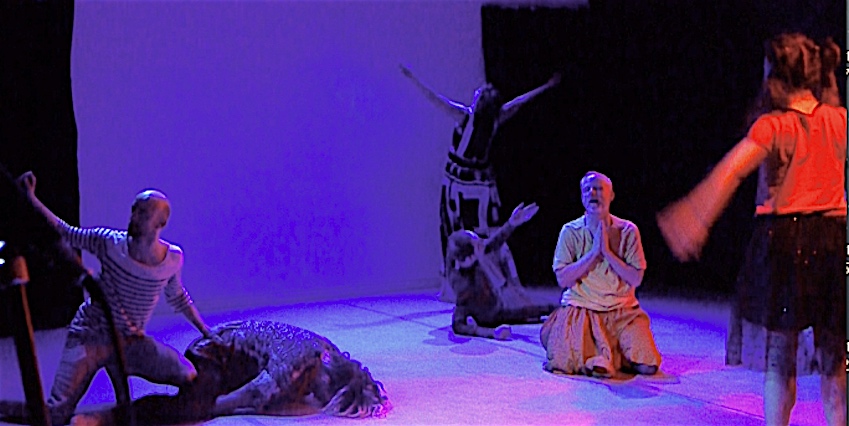
"FALLEN MONSTERS" performances in May 2018 Portland OR
NOT IMPROVISATION BUT AN OFFERING OF SELF
”Asocial interplay" is not the same as improvisation, as commonly defined and known in theatre and dance. In asocial interplay, we want nothing from anybody else nor do we depend on external cues from others (or the audience) to spark or sustain interaction. Asocial interplay sustains itself by each individual's deepening commitment to their own predetermined internal sources. As this internal commitment increases, we apply specific intentions (see “The Five Intentions”) to amplify these sources and their expression through vocalization, gesture, action and interaction from higher levels of individual integrity and autonomy. As this self-commitment process deepens, our own presence expands; we have more of ourselves to offer. Asocial interplay supports a spirit of offering of self, rather than a taking or getting from others.
Asocial interplay is never forced, confrontational, or encounter-based. In high levels of asocial interplay, we are acted on and influenced by the presence, actions, and sounds of others, while our own presence, actions, and sounds act on others. Asocial interplay occurs inside this open-ended and unpredictable interaction of self-governing presences. Sustaining our concentration amidst this asocial interaction requires a kind of "double vision" that allows total commitment to our internal sources while remaining aware of the immediate environment of others.
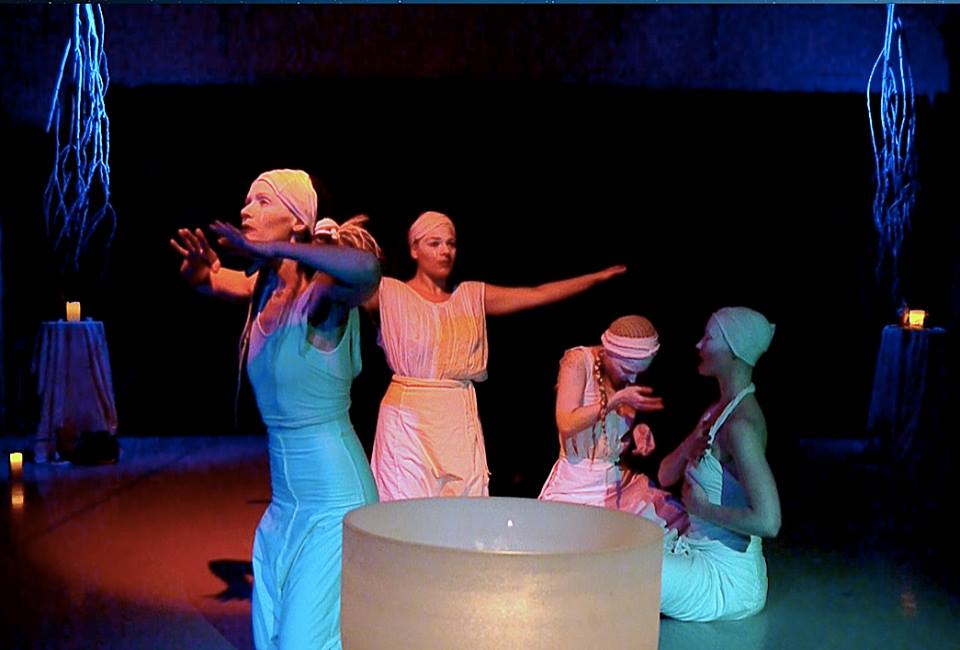
"SOROR MYSTICA: Ritual Invocation of the Anima"
performances in December 2017 Portland OR
While working together in an asocial climate, a unique group unity unfolds
from each person's heightened commitment to their own internal sources while
sharing that Presence with others and being acted on by the Presence of others.