On Cultivating Intimacy with Void
© 1977-2022 Antero Alli
I am nothing.
I shall always be nothing.
I cannot want to be anything.
But I have in me all the dreams of the world.
- Fernando Pessoa (1888-1935)
No-Form represents the crux of this paratheatrical work and serves three functions: 1) to relax intellectual directives and preconceptons 2) to cultivate enough internal receptivity to sense and engage vital currents, impulses, and autonomous forces in the Body - the internal landscape - as movement resources and 3) to discharge and release these energies after their engagement by disidentification, ie., letting them go. This No-Form state is entered before and after each engagement of forces, impulses, and emotions of every movement and ritual exploration of the internal landscape. The first function cultivates a state of profound internal receptivity. The second function of engagement with energies induces a physically active trance state. The third function acts as a trance-breaking device by returning to No-Form to dissolve attachment to previously engaged energies.
Though no language exists to adequately describe this No-Form state,
the following adjustments have been known to support the experience:
THE PHYSICAL STANCE
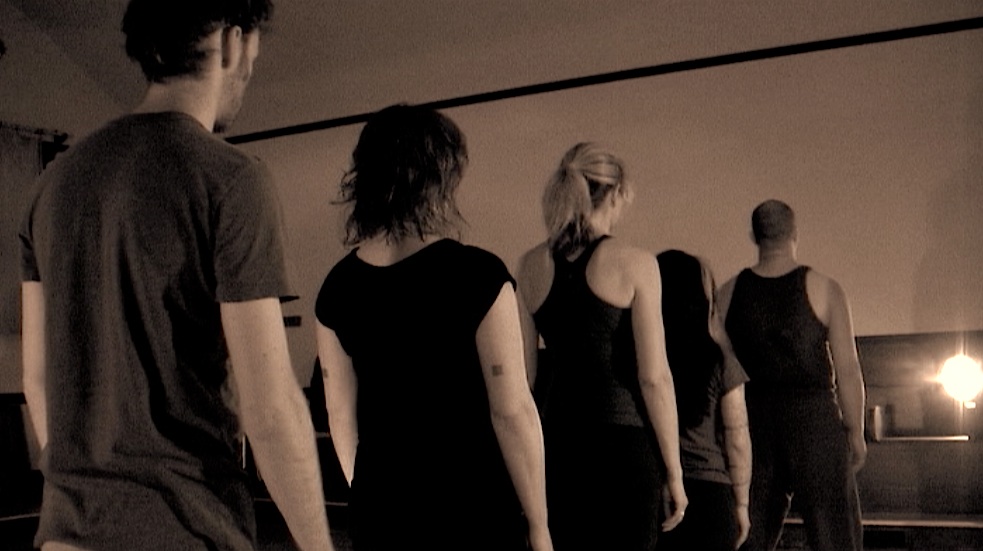
Stand in any way that supports vertical rest -- find the point of minimal effort to remain standing; stand at rest. The following physical adjustments can support emptying: 1) unlock the knees 2) widen the stance 3) drop the pelvis 4) let the spine drop, relaxed and suspended 5) focus on a full exhale, allowing the inhale to occur as a reflex and 6) eyes shut or open as a slit to minimize external stimuli.
Notes on breath: Emphasize the exhale in the standing no-form process so as to allow the inhale to occur as a reflex. In this way, the vagus nerve secretes a transmitter substance (ACh) which causes deceleration within beat-to-beat intervals of the heart via the parasympathetic nervous system (PNS).
INTERNAL ADJUSTMENTS
Once the outer actions of the physical stance are established, the following internal adjustments can support the inner action of No-Form: 1) withdraw attention from the external environment and reconnect attention within 2) relax the desire to control the outcome of the experience 3) relax the desire to control 4) find your anchor or comfort at being nothing and 6) be nothing.
THE CHARGING ACTION OF NO-FORM
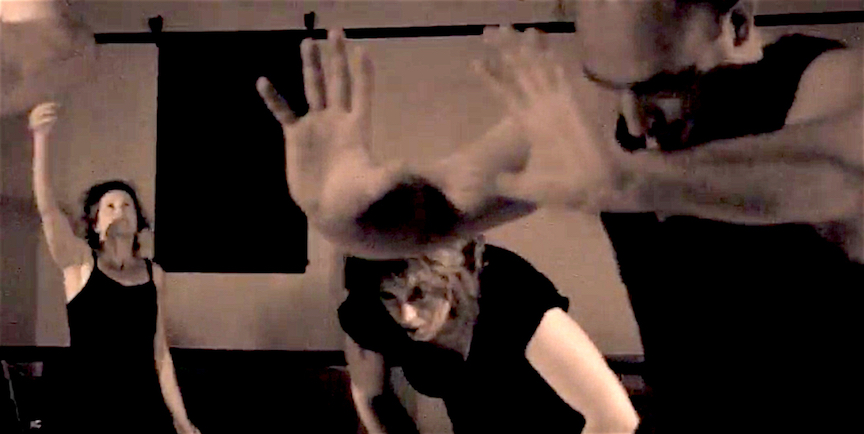
After entering No-Form, we choose a source of energy - a force - to access, such as the element of Fire that already exists within the Body as the electrical impulses of the central nervous system. Turning the attention within, locate a contact point with this Fire energy. At peak No-Form receptivity, absorb the Fire element thrughout your Body to saturate and fill the No-Form state. As the Fire energy fills your receptive vessel, don’t try to control or direct this energy. Allow theenergy itself to dictate the direction and outcome of your movement, sounds, and gestures. The deeper your previous receptivity in No-Form, the greater the chances your experience can deepen with the forces engaged. This initial stage of receptivity and engagement represents the "charging" function of No-Form. It acts as a trance-induction device; it alters consciousness from one state to another.
THE DISCHARGING ACTION OF NO-FORM
Return to the No-Form stance after you’re done engaging whatever force was chosen. In No-Form, release your attachment and identification with that force; let it go. This discharging action of No-Form acts as a trance-dispersion device. By returning to No-Form after each ritual engagement of energies, internal receptivity is restored; we return to being nothing or, nobody but ourselves. Returning to No-Form minimizes the ego inflation that occurs with any identification and merging with the unconscious contents of the psyche. These two functions of No-Form -- charging and discharging -- can only occur by setting apart time before and after each ritual immersion to stand in No-Form.
PERSISTENCE OF PRACTICE
First, we encounter the fertile Void of potential energy. Then comes the many reactions and resistances to this Void experience. With persistence, a friendlier relationship with the Void can ensue until (at some unpredictable juncture) all separation between self and Void dissolves leaving an ineffable experience of being the Void itself -- the potential state where all forms emerge and are born and dissolve in perpetua.
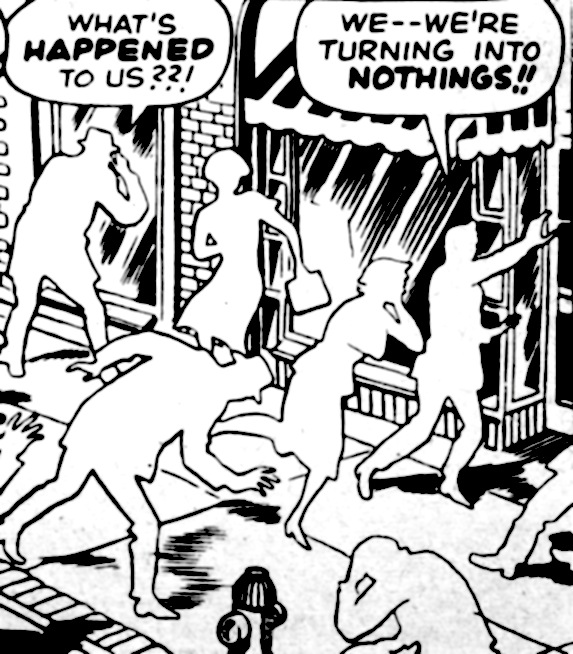
BE NOTHING. The default dominator culture, and its bastard offspring celebrity subculture, invests high status on becoming somebody while shaming the idea of being a nobody...a nothing! However, as all self-governing bodies eventually realize, real power (not control), real freedom (not ego-independence) and real creativity (not consumerism) stems from intimacy with the formless, invisible sources -- the fertile void -- behind all palpable, visible and manifest effects. - Antero Alli
APPROACHING NO-FORM
"The Shifting Contexts of Void Space"
My Personal No-Form Journey by Antero Alli
Trigger Methods
ritual technology
Paratheatrical articles
by Antero Alli and others
"Undoing the World"
a paratheatre manifesto