"CRUX OF THE MATTER"
Non-Sectarian
Crucifixion Archetypes
Interview with Antero Alli
by Jonnie Gilman; November 1999
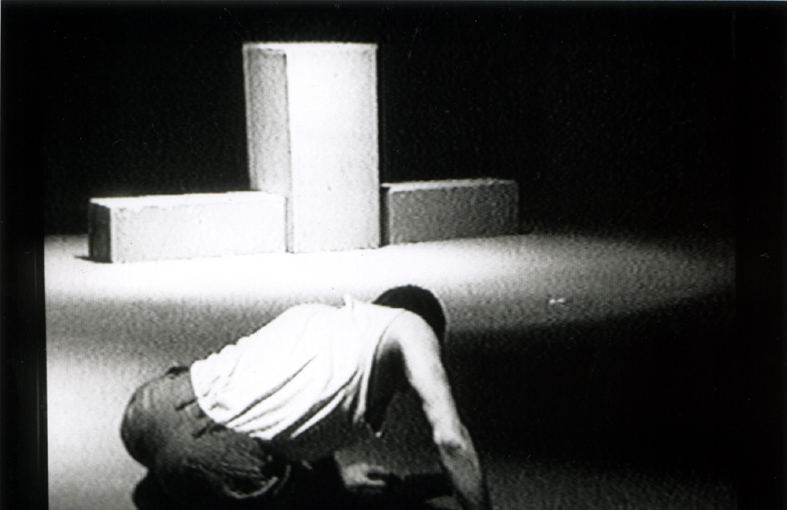
This interview followed the
paratheatrical CRUX lab that met three times
a week for five weeks
in Berkeley during the summer
of 1999. I made an
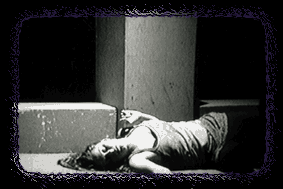
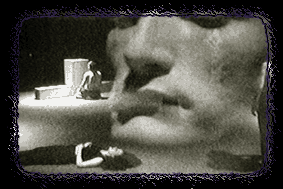
82-minute video document, CRUX,
of some of the
rituals and participant
reactions
to their experiences.
This interview was first published in the
(now defunct)
Seattle tabloid,
INSTANT PLANET. -- Antero
Alli
JONNIE
GILMAN: Did you find with the people
participating with the ritual that they had a strong
charge to the symbol of the cross in and of itself
and did that get in the way?
ANTERO
ALLI: Yes and no. The charge was was much stronger for some than others yet no one escaped its mysterious magnetism. My assumption around the symbol of the
cross is that it has deep historical relevance,
as well as, profound psychological, spiritual and
religious charge. Oftentimes much deeper than what
we're aware of. As a species we've spent the last
couple of thousand years in various forms of religious
warfare, acting out various opposing and conflicting
vantages of what the cross means. The crux of one
culture differs from the crux of another culture,
and if you have conflicting cruxes that face off
with each other, the horror of war can be ignited.
I'm using the word crux here to symbolize a point of worship, meaning what an individual life or a culture revolves around; what it lives for. Sometimes it can be broken down to: "what am I living for?" What is a particular culture living for? If you honestly ask that question of yourself, you can begin tracing your responses back to a crux -- a point of worship -- of what your life actually revolves around - not what you hoped it might revolve around but what you actually live for.
In this CRUX project, I avoided intellectual
or philosophical discourse on the religious symbolism
of the cross. Instead, I presented the cross as a symbol
for what the crux might represent to each individual
without binding it to any historical, religious
or metaphysical context. If these levels came up
on their own, then fine. But to fill our minds with
past crux references would only impede a more authentic
response. I was afraid these past references might
overwhelm and interfere with the exposure and expression of something more personal. So, I introduced
ritual triggers to this group that provoked, in
bits and pieces along the way, elements of what
might lead to their personal crux.
The reason for presenting it in bits and pieces
was that oftentimes people have a concept of what
they're living for, or an idea, or even a belief
but when actually confronted with the psychological
pressures innate to the reality of what they are
living for, those previous concepts often break down.
At that point, you either let go of those images
or suffer a kind of psychic immobilization and crucify yourself
on a dying concept. And this happened, to some extent,
with everybody. Fortunately, everybody also had
many opportunities to outgrow their obsolete ideas
of the crux and restore their psychological freedom.
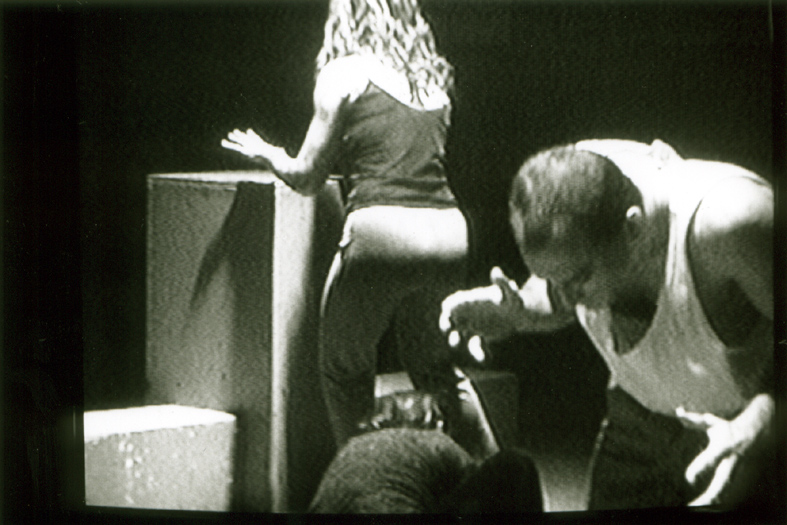
Once you confront the crux as direct knowledge
or an impression of a living energy and force within
you, it's difficult to deny its existence. Consequently,
there is often a kind of ego death in that confrontation
and a need to redefine
and rethink what you are living for. This crux process
is an ongoing one, a kind of life work. It's not
like, all of a sudden everybody gets their crux
and that’s it. (laughs) Far more often than
not, it involves going through many layers of the
crux until you get to something that makes itself
evident by the force and the energy it imparts to
the life you are actually living. You see, the crux
energizes you.
JG:
The crux seems to be a symbol of the individual
in and of themselves, embodying the horizontal and
the vertical, that forms the crux. The individual
living entity finds himself in the center of these
pulling, pushing equalized forces. They are right
there, stuck. Even though you are getting away from
the crucifixion, its like you are pinned to your
cross in that way.
AA: In this group experiment we discovered a certain irony to that solitude. By confronting our own individual crux, we saw how we were also connected as a group. We looked around and saw how we were all nailed to the cross of our own existence; we’re all crucified somewhere. Everybody’s stuck somewhere. That sense of unity, I think, bonded the group. So, this wasn't a self-isolating ritual. It actually promoted a deeper group unity but to get to that unity we had to penetrate our own individual crux first and that meant arriving at some pretty intense and painfully lonely places where we were righteously stuck. You know, there's a fine line between a rut and a groove and the deeper the rut, the closer the crux. By the way, this whole notion of being deeply stuck or nailed, was never presented with any incentive for "self improvement," or getting “unstuck” but as a symptom of getting closer to center. The oervall incentive was self-knowledge and maybe, self-transcendence but not without serious self-confrontation.
The word "crux", is
a mountaineering term for the most difficult passage
on the way to the top of any mountain. This tough
passage is called the crux because if you get through
it, you can reach the top of the mountain. If you
can't get through the crux, you have to return to
base camp or, get stuck in the crux.

JG:
Its a kind of birth canal.
AA:
I relate more to the mountain metaphor. I mean,
here was this group on the way up to their own existential
peak, to discover the edge of whatever they are
living for and each climber had to confront their
most difficult passage to get there or, climb back
down to base camp.
JG:
There is no way to go back to sleep once you have
that knowledge.
You can't not know that.
AA:
That depends on the degree you wake up. It’s
easy to slip back into sleep, so to speak. I think
that without some kind of ritual device or catalyst
or drug or accident to force or shock us back into
the heat of our crux, it is easy to fall asleep,
again. We learned to create our own pressures and
ways to keep the heat up to stay awake enough to
keep one eye on the peak. Maybe it’s an acquired
taste for difficulty, a certain excitement for meaningful
struggle. Not all struggle or difficulty proves meaningful.
JG:
Watching the video, I was struck by the intense analysis
that people would go into to try to understand what
their motivations were, or what was the heat for
them, why they were here, and, in some cases it
seemed immobilizing. There's a certain fixed quality
to that because in the midst of all these opposing
energies, self conflict, getting kind of lost in
a mental realm of analysis.
AA:
Direct exposure to the crux point can shock the ego. And one common reaction to that
shock you can see in this flailing about for answers
and grappling for some kind of conceptual understanding.
I think this is a natural way ego attempts to restabilize
itself after the shock, to get back in control and
make sense of something larger than our mental
categories. Sometimes ego can tear this experience to tatters. Lke a hungry dog attacking a steak, it can become
morbidly obsessive with creating certitude or control where there may be none. This shock to ego is really
an exposure to the possibility that some part of
you lives for something other than ego. Ego doesn't want to hear that. What a blow to vanity! Ego wants
to believe that IT's what you are living for. Ego
wants to believe that IT's the most important thing.
And so ego
will try to come back and impose some understanding
of what's happening in an attempt to regain false
control.
Everybody went through some degree of this ego drama. These
fixations on explanations came out more in the beginning.
The more you go back to the direct experience of
the crux, however, the more that experience softens
those fixations to try and explain everything. As people
were subjecting themselves more and more to the
exposure of their crux, they tended to grow a little
easier around that compulsion to understand everything. There is real mystery in the
crucifixion archetype. Over time, I saw more acceptance
of that mystery and more ease with simply being in it,
rather than needing to understand it. Some people
showed more die-hard ego struggles than others by clinging
tightly to their dogmas, trying to conform their
experience to previous beliefs which only added
to their suffering. Sometimes, the crux hurts.
JG: The need for
answers is perhaps a form of resistance.
AA:
For some, it can be a brutal revelation to be exposed to what you are actually living for, as opposed to what you think or hope you're living for. If you have a negative reaction to what you're living for it can be like waking up to a nightmare. To live with that knowledge is obviously very challenging. The only creative thing you can do at that point is muster up the courage to show yourself some compassion to live with more truth about yourself. Sometimes you find out what you are actually living for and are genuinely excited by that. That's not hell; that’s heaven. But if you are waking up to anything you are not ready to live with yet, that may as well be hell.
JG: Once people grew conscious of what they’re
living for and it was distasteful to them,
did it
compel them to shift that core of what they are
living for?
AA:
Each person reacted differently to that incident.
Some people would just bury their head in the ground
ostrich-style and try to escape or deny and pretend they didn't
see it. Others would surrender to the fact and agree
to suffer and experience remorse or shame or whatever honest emotional reaction they needed to experience
to what they were living for. And I respect that.
Maybe they discovered how they had settled for less
and felt bad about that. One person
discovered that all she was living for was sensation.
Her whole life amounted to producing more and more
sensation. Pleasure or pain, it didn't matter. Just
as long as more sensation was produced. When she
first discovered that, she became depressed. She
very much wanted to believe that somewhere deep
inside there must be something more to life than
just sensation. It was her good fortune that she
agreed to suffer through that. She also showed enough
courage to bear up to that unbearable truth. By
suffering through it a new vision was born for living
for something other than sensation.
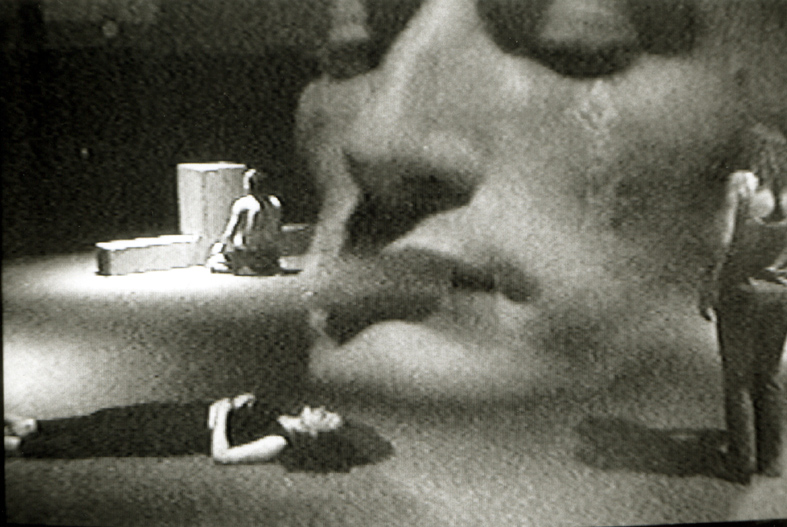
JG:
The drive for sensation is almost a hunger for perception.
AA:
Maybe. But it also could be the result of superficial
values. In many ways the CRUX project was about
the disclosure of values. What people were actually
making important in their lives. Not what they thought
they were making important, or wanted to make important,
or should be making important if and when they got
their act together. No, it showed them what they
were actually making important, whether they previously
knew it or not. Some people were shocked to realize
how dominant the force of habit was in their lives.
Others found out how dominant the force of will
was in their lives. We're not talking about one
force being better than another but two living forces
that prevail in the daily lives of people, every
single day.
Another important polarity was the more morally
charged forces of good and evil, the existing force
of good and the existing force of evil. And these,
of course, are subjective assessments as we're not
following any religious dogma or any societal definitions
of these terms. I encouraged an openness to the
existing condition of goodness within the group,
as well as the existing conditions of evil, as we
personally know and defined those terms. Good and
evil were never explicitly defined for anybody.
This was no Sunday school lesson...
JG:
The jumping off of that crux point to get the perspective
to see what I would be living for seems very daunting
to me. The cross is so much one's own incarnate
self. You surrender to your situation and live consciously
with that.
AA:
The mystery in the crucifixion archetype.
If you can get over the delusion of self-improvement
and find the courage to commit wholeheartedly to
your direct impressions of where you are the most
stuck, and really muster up the courage to continue
passing through its heart, the very center of where
you are the most stuck, without any preconception
that it's going to make you a better person, or
you're going to become free or enlightened, or whatever.
If you can get past all this nonsense and put yourself
on the line, there looms the mystery of resurrection.
Not just in the Christian sense but in the mystical
sense. Surrender doesn’t mean dwelling in your
problems. Surrender demands 100% integrity in your commitment
to following through and this carries no guarantee whatsoever.
There is no concept or image to describe how that
will turn out or how that will look like. It's
a genuine mystery in the way that death is a genuine
mystery. We don't know what death is until we're
there, until its happening to us. Same with life;
we don't know anything until it's happening. Truth
be told, we don't even know what's going to happen
next.
JG:
It seemed that within this group there was a high
degree of self responsibility.
People stuck with
it and continued thru the process.
AA: Safety is a very important factor. In this ritual
process, everybody pledged to be responsible for
creating their own safety. So no matter how strange
or weird things got, each person basically agreed
to play their own mom and dad. With everybody becoming
responsible for their own safety issues, there's
also a higher degree of group autonomy. Without
that high level of self-responsibility, this CRUX
lab would never have happened. And that was my main
incentive in inviting each of these people. I hand-picked
each person for the high level of motivation I perceived
in them around this very thing.
JG: Yes, I see how safety is very important. When I
experienced this work in Seattle, I saw a very risky,
almost Pandora's box kind of situation, where there
was such opportunity for psychological stuff to
bubble up, for projecting mom, dad, authority or
whatever.
AA: Trouble is, the psychological stuff of projection goes on anyways in any group process. It will always happen. The difference is that when you commit yourself to 100% accountability right from the start, you tend to look at those projections more as opportunities to begin reclaiming more authority and autonomy for yourself, rather than squander it away. Projection is also inherent to ritual evocation of archetypical processes when it’s done on purpose, as in conscious projection which involves an intentional charging of the ritual space with a certain energy.
Conscious projection is innate to evoking the forces
in a ritual that you are there to experience in
the first place. So, this intention of accountability
changes everything. If you don't do rituals (or
live life, for that matter) with the intention of
accountability, you are more prone to passive self-victimization
where you tend to only see how circumstances overwhelm
you. This immature behavior leads to feelings of
helplessness and betrayal and all the other negative
reactions a child acts out when not taken care of
and paid attention to. With the intent of accountability,
you agree to take charge of paying attention to
the child -- to monitoring your own behavior --
and taking care of the child when those needs and
fears surface.
JG:
In this group alchemy that happens, is there more
of a sense of group mind or group consciousness
developing ?
AA:
Any group unified by some purpose or reason for
being there is going to birth a group mind. I was
looking to support a very particular kind of group
mind based in self accountability and one that was
up for an adventure, a challenge. I tend to look
at any experience that expands consciousness, whether
triggered by ritual or by life itself, as an adventure.
My interest in consciousness expansion is not for
its own sake; any fool can get high. I look to it
as part of a larger development of conscience, something
I think is taken for granted in this culture. People
assume they have a conscience just because they
know how to feel guilty. Yet oftentimes this “conscience” is so socially conditioned into us as a life-constricting
reflex, it keeps us emotionally locked in a state
of low grade guilt without knowing it. This can
manifest as a kind of pesky self-consciousness,
annoying insecurities and a long-term stifling of
self-expression.
If you have not defined your own ethics yet, you've probably inherited your morals from the culture at large and/or your family. Your personal ethos define in your own terms: what's good, what's bad, what's evil, what's right, what's wrong. Experiences that expand your consciousness give you a better chance to see and realize the truths of your life and your own responses and definitions for what they mean to you. When you finally develop your personal responses to the truths you experience, you can define your own ethics and a conscience germane to the truth as you know it.
This is the
type of conscience I'm referring to. And I think
this kind of conscience isn't possible without direct
experience. If you are not experiencing life for
yourself, you may have temporarily lost the capacity
for direct experience. If you want to restore your
capacity for direct experience, you must be willing
to struggle and fight for it, for your consciousness.
If you have lost the capacity to think for yourself
and to come to your own conclusions and determine
your own definitions for things, then I think you
are more at the mercy of circumstance and the backup
programs of consensus, socially sanctioned moralities.
JG: In doing this work, what has been your primary motivation,
what compels you
to take this on, show this to people,
continue it, evolve it.
AA:
I do it to stay honest. If I don't find ways to
remind me of my own crux, I slip into cultural trance.
I'm not immune to that yet. If I can't occasionally
break cultural trance and receive deeper impressions
of direct experience, I'm nodding off with the rest
of them. I also utilize these labs to test and develop
creative ideas that sometimes bear fruit in the
areas of filmmaking and theatre.
JG: It was interesting in the film how one gentleman
mentioned that it changed
his perceptions, his sensate
perceptions of the world. Something in the process
really does get to essence.
AA:
This thing called essence is peculiar; a very misunderstood
term. As I know essence, it refers to an immutable
element of our nature. It doesn't change. It has
a predetermined quality about it, something that
was established perhaps at an extremely early age,
maybe one year old, two years old, who knows? But
I think it’s connected to the crux in that
it doesn't change. So maybe the essence is more
at the core and the closer to the surface you get
to your own experience, of your own self, or even
of an entire society, the more things noticeably
change.
I think as you grow more aware of what is essential
to you, it's easier to relate with what is most
essential in others. And there's a greater chance
of connecting on an essence to essence level with
others, which I find very satisfying. I think part
of what CRUX did was engage people at various degrees
of essence. When I say various degrees, I mean in
proportion to the degree of commitment each person
showed to surrendering into the immobilization that
sometimes comes with the crucifixion archetype.
To some people, immobilization means death. It's
just the worst thing imaginable, the most unbearable
thing, to be stuck. Others find a little more comfort
with this. They find their own place in this immobilization
and reach through the center of that. These individuals
tend to integrate their crux a little sooner, I
think. And then there are those who genuinely define
themselves by motion and change. The slippery characters.
For
this CRUX lab, we appointed ourselves nicknames
to symbolize our crux. One person called himself
Slippery. I think he exemplified an important drama
around confronting his own slippery nature and how
through brutal self-honesty, he was able to drop
down into something less slippery by calling himself
on it.
excerpted from
TOWARDS AN ARCHEOLOGY OF THE SOUL
(Vertical Pool Publishing, 2003) by Antero Alli
3-MINUTE EXCERPT FROM THE VIDEO
6-MINUTE EXCERPT FROM THE VIDEO
ANTERO ALLI
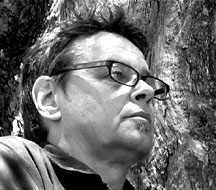 ...ANTERO has been creating original performance works using paratheatre processes since 1977 and, has been producing experimental video documents and feature fiction films since 1993. His paratheatrical work is documented in his book, "Towards an Archeology of the Soul" (Vertical Pool, 2003). Alli's 2005 docufiction feature, "The Greater Circulation", incorporates a paratheatre performance in a critically acclaimed cinematic treatment of poet Rainer Maria Rilke's "Requiem for a Friend". His 2008 experimental feature, "The Invisible Forest" (2008; 111 min.) explores the radical ideas of French Surrealist, Antonin Artaud.