paratheatre workings
Jessica Bockler interviews Antero Alli.
June 2, 2006. Berkeley CA.
 xxx
xxx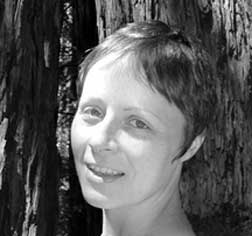
Jessica Bockler conducted this interview as part of her Ph.D thesis project with Liverpool John Moore's University, UK. In early March 2006, she travelled to Berkeley to participate in the Spring 2006 Alchemy paratheatre Lab, courtesty of a grant from Arts Council England. She currently faciliates her own labs in Liverpool UK. Jessica met with Antero in person for this interview at his north Berkeley home. Antero Alli is director of ParaTheatrical ReSearch in Berkeley CA.
Jessica: I’d like to explore with you if you have an underlying map for the work you do in ParaTheatrical Research. A metaphor, image, structure.
Antero:
I confess a certain irreverence towards intellectualization. Beyond its remarkable map-making capacities for modelling experiences, I have also come to regard the intellect as something of a liar. I have conditioned and trained my intellect to follow intuition – not the other way around. When maps develop, they're usually going to be the result of approaching my own work intuitively with no preconceptions.
Jessica: So, have you, over this long period of time, found that there are core pathways up the mountain as it were? Or is each path completely new?
Antero:
I can relate to the mountain metaphor for human experience. I can also see myself as a kind of sherpa, a mountain guide. I have been to the top and back many times and so I know some ways up there and safe ways back down – and so I can bring people up and down. But you know, everyone must take each step of the way by themselves. It's important that we make our own mistakes, fall down and figure out how to get up. I’m not a teacher who spoon-feeds students answers. I’m more likely to shape a question in their hearts so their questioning becomes part of their own quest. The right questions can lead a person to a more vital participation than any answer could. The best questions don’t have answers but they can fan the flames of the inner quest -- the journey of the heart.
The peak of the mountain is where we’re headed. As a metaphor, the peak represents how each individual comes to experience, define, and know their own peak experiences. The peak may look and feel differently for each person, depending on what angle they’re approaching the mountain from. Peak experience for one person can be quite ordinary to another person.
Jessica: Do you think there is an ultimate … as you climb up the mountain, do you see other peaks in the further distance?
Antero:
Sometimes … but the purpose of climbing a mountain is not to set up camp and live up there at the peak. When we get up there, we climb back down again or risk weathering life at the peak and burning out. I'd rather live down in the valley somewhere, where conditions are more livable and far less traumatic. You see, a genuine peak experience can be quite intense on emotional, psychic, and physical levels -- for some, it can even trigger powerful spiritual revelations. Peak experiences are not always blissful and ecstatic. Some peak experiences can erupt in epistemological crises where our core values are tested and uprooted and where we are forced to reassess what makes life worth living. What if we discover we are living a lie and don’t want to keep living a lie? Once you get up to the peak and come back down, then what? What do you do? You climb back down and you go home and then what happens? Hopefully you find ways to integrate your peak experiences into your daily life, and this is, I think, one of the more difficult and important processes of this work. Once we have reached our personal peak, then what ?
Jessica: That’s one of the areas I want to cover with you … the integration of what you work with in the lab … into everyday life. – Does this work have spiritual dimensions for you … or is it more psychological?
Antero:
For me personally, it’s become more spiritual but for some others it may be more psychological. It all depends on the person’s needs, their disposition, personality and current stage of life. Some people come into this work with lots of unchecked parental and cultural conditioning that pretty much owns them. That mechanical programming tends to be the first thing they grapple with, whether they know it or not. In their minds they may not call it psychological but if they are confronting conflicting authority issues, especially the projection of authority outwards -- and sometimes I’m on the receiving end of that delusion -- then, their process turns psychological. As the one guiding others up the mountain, it's only natural they sometimes look up to me as mum or dad but, of course, I’m not their mum or dad. I try to be attentive to these projections and remind them gently that I’m just the guide. I'm not the mountain -- I just work near the mountain.
Doing this paratheatre work has helped me sort through quite a bit of my own psychological baggage, my obsessions and fixations and phobias and so forth. Three decades later, I still have issues but they don’t carry as much charge. I don’t feel as if they really own me like they did when I was younger. And so I’m a little more clear-headed about it now. Thankfully – I’m 53 now – so I should have a few things figured out by now! (Laughs)
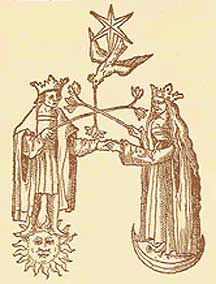
Jessica: In your sources of inspiration you have mentioned your Grotowski roots and I get the sense that you draw inspiration from Carl Jung … is that correct?
Antero:
Certainly the Alchemy Lab pays tribute to Jungian thought around transformative processes but there's no strict adherence to Jungian psychology or any mandatory reading of his books. Overall, I do take to heart his notion of archetypes and especially the archetype of The Self as an autonomous psychic dynamic "supra ordinate" to the individual Ego, meaning, the Ego as subordinate to and created by The Self. What we are exploring in this paratheatre work are aspects of The Self -- Masculine, Feminine, the Four Elements and so forth. In this archeology of the soul, we sometimes have to tunnel through and excavate the sediment of personal ego issues around these archetypes to get to the core Self they are deeper expressions of. Jung once wrote, "the experience of the Self is always a defeat of the Ego" and anyone who has completed at least one lab in this paratheatre work knows firsthand what that means.
Most of my reading of books and texts happened in my twenties and thirties while searching for the meaning of Life. I no longer search for meaning in Life since it's more engaging to my Imagination and my will to create it. Since my forties, I have also written more than I have read and most of what I have written has been published; I have seven books in print. And so my primary source of information has shifted from books to experiences. As a result, I am now heavily biased towards personal experience -- not just my own, but the experiences of others. Firsthand experience has become the new authority.
Jessica: I want to really go into the practice now. And one area I want to ask you about is, just in terms of clarification, we have been feeling our way into active and passive receptivity. Could you say a little about those two?
Antero:
Passive receptivity is like a double yin in its capacity to fully absorb. You’re sitting down in a school and there is a lecture happening and you’re just absorbing everything … you try to take in all the information, you write notes, you’re recording it, it’s full-on absorption of data -- a passive position. Active receptivity happens when you're capable of taking in information while interacting with it. You're having your own thoughts about it and listening to your own feelings. You start to develop your own point of view about what you're absorbing. And that's where you can get into processes of creative thought, independent thinking, emotional autonomy. You develop your own feelings, your own positioning and view... instead of pretending that you are some objective, neutral observer which I find silly and delusional.
In the medium of this paratheatre work, active receptivity happens when you let your body respond with its impulses to a particular stimulus or source of energy you're absorbing. Whereas if you're just absorbing energy in your body passively, eventually it will immobilze you with more experience and information than you know what to do with. The impulses to move are blocked by the inertia of too much passivity.
Jessica: My next question is around the dynamic of will and surrender. And I’ve put intention in there as well. Somewhere these concepts are all floating about and I’m curious how you see that dynamic.
Antero:
Define for me what you see as the dynamic you’re talking about.
Jessica: OK, to me this process feels like a form of ‘controlled abandonment’. There is some level of control in the work I do, it isn’t all just soup. And I’m still hearing what you say to me – I’m not losing that. On occasions it has dropped away – but I’m trying to maintain that channel to your instructions, for example. And that seems to be an aspect of will. And then at the same time there is surrender, in that my ego has to step aside to let something else enter or rise.
Antero:
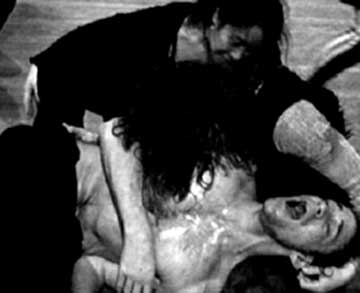
OK, I understand now. This issue addresses a central area of work in this paratheatre medium that involves two contrary yet related lines of direction. One is a ‘stream-of-impulses’ direction where we grow receptive to energy sources in the body itself and learn to completely give ourselves over to them as movement resources without any attention to controlling the outcome. The expression of this direction tends to be messy and chaotic. It’s like a soup. It’s not something I would put in front of an audience and call Art because it's not art, it's therapy. Though this direction marks an initiatic phase to our capacity for accessing the internal landscape, it does not assure any real communication of that event.
The second direction has to do with applying a sustaining care to whatever source or force we are experiencing. By tuning into what we actually care about in that experience, a kind of innate precision expresses itself. By commiting to this sustaining care techique, an emotional investment occurs, an empathy that guides its own emerging patterns of motion, or choreography. This process can give more clarity of form to whatever emerges from the internal landscape. What's really difficult is maintaining a dynamic tension between the two orientations of impulse and care. When our work is totally driven by the ‘stream of impulses’ approach, the result ends up like a soup with little or nothing communicated. When the work is completely driven by care and precision, it can kill the spirit and dampen spontaneity. The most advanced paratheatre work always involves entwining the two, form and force, while developing the unique stamina for maintaining their synthesis over greater durations of time.
To reach this level of synthesis between spontaneity and precision is very difficult. I have seen this happen only in groups in which everybody has been working with me for at least three years and then, for only minutes at a time, as it can be quite exhausting. Maybe fifteen minutes maximum before you need a break but usually it lasts only five or ten minutes.
The purpose of source work is to unleash spontaneity and convulsive eruptions of raw energy that bursts through the body, almost like a spasm, an involuntary reflex or orgasmic response. It's primal and tied to the erotic impulse. Whereas precision work is tied more to the intellect's talent for pattern recognition and the human desire to communicate. Aesthetics also come into play when we want to look good, create work of beauty, and have a certain effect. This precision direction also expresses the desire to control the outcome completely.
Jessica: What is the overall purpose of this work?
Antero:
The purpose of this work depends on who is doing it and why they are doing it. Actors, performers, dancers, and singers often do this work to untangle themselves from redundant habits to restore a greater access to their creative sources. I think the general overall purpose of this work is two-fold. At the crux, it’s about restoring capacity for direct experience which includes deepening capacity for direct expression of experience. We live in a culture and an era where people are rapidly losing their capacity for direct experience. So much of our experience is now significantly mediated in a hyper-media society driven by consumerist demands for instant gratification, gadgets and media appliances, and most unfortunately: the exaltation of convenience above creativity. I see a growing collective need for reversing this regretful trend.
Jessica: Can the work be regressive, instead of progressive?
Antero:
Well, it can be and needs to be both. Sometimes you have to regress if you have become too smart for your own good, or too clever. Maybe you can relate to this. In order to move forward, a certain amount of undoing or back-peddling has to happen. In that regard, regression has a place especially if it can dismantle outdated defenses and ego structures that inhibit spontaneity. Creative regression is not about regression for the sake of regresson but moving one step backwards to leap two steps forward.
Jessica: When you do this work, can it trigger people to reverse their development, rather than move forward?
Antero:
Yes, it can. This is why this work is not for everybody and why it should never be taught at university level or to anyone who simply has the money to pay for it. This is also why I interview all the candidates before entry into this work. This work is not for everybody.
Jessica: Do you feel you might want to make it more accessible? Is that something that would be valuable to the world? I’m curious when the personal becomes the political …
Antero:
I find that this work acts as a solace or sanctuary for those individuals who are ready for it. These might include those who are thinking for themselves, asking questions and looking to undo or dismantle ineffective behavior frustrating their creative impulses and/or their spirituality. Since the core purpose of this work begins with developing receptivity to a personal encounter with the void, many people will unconsciously resist this work. You see, our production-oriented society places little or no value on being nothing, or being a nobody -- in fact, wecare conditioned from birth into shame for being nothing. However, in this paratheatre work, little substance or value can be discovered until a personal intimacy with void, or what we refer to as No-Form, is established.
The technique of No-Form significantly narrows the range of people that can do this work or would want to do it. We live in a void-ignorant society and many people are quietly terrified by the prospect of being nobody, let alone becoming intimate with an all-encompassing, enveloping experience of the void. Though these fears are naive and childish, they persist in the majority of the modern populace. Thanks to the experiments and discoveries of Quantum Physics, we now know that 99% of the known universe is made of this void, not the "things" in it. This includes us; we are all expressions of this Void. And this void is not empty. There is no such thing as empty space in nature. What appears as empty space is actually teeming with potential energy, or what we call No-Form.
Jessica: Could you say more on the difference between this work and therapy?
Antero:
Though it’s not the goal, paratheatre work can have great therapeutic value. The two things that are the most consistently challenged are a person’s integrity and their autonomy. This amounts to our capacity for being totally honest with ourselves and our capacity for following through with our personal choices into action and its natural outcomes. This process also tests our capacity for play and finding our own answers – rather than looking outside our firsthand experience for guidance. Given this criteria of integrity and autonomy, those people who want to be told how to do things find frustration in this approach.
Often in psychotherapy the advancement of insight involves some kind of transference phenomena between the psychotherapist and the patient. So, that’s a transference of internal psychic material onto another person to work out our stuff. In this paratheatre work that transference phenomenon is utilised but not onto me or any external person. I’m no psychotherapist. Instead of a person, our internal material is consciously projected onto a specific area out in the space itself, usually demarcated by a boundary or a circle. After cultivating enough inner receptivity in the No-Form technique, we step into that circle and subject ourselves to our own projections. This transference phenomena then becomes a ritual skill when it's done on purpose. By subjecting yourself to your own projections over and over and over again you can learn a lot about yourself.
In this process of conscious projection, we learn firsthand about the contents of our subconscious and maybe, the universal archetypes that our personal complexes link to. We learn how the elements of the internal landscape express an autonomous nature -- these psychic and psychological dynamics really do have a lives of their own that cannot be controlled by the ego. Complexes also have lives of their own. They govern us, for crying out loud. We don’t control them. And so, we’re interacting with autonomous complexes, psychic dynamics, and archetypes with their own agendas. We engage these autonomous complexes and dynamics by learning to serve them through movement and vocal creations that best serve their expression through us. This marks a fairly advanced stage of the work when it's done consciously.
Usually, in the beginning people are clueless about this notion of serving – they just immerse themselves and identify with whatever subconscious contents arise. They end up regurgitating their inner material on the floor and flail about, kicking and screaming and crying. There is no service -- it’s all immersion and absorption. This important stage that correlates with the alchemical conjunctio; the merging of opposites. Conscious ego and subconscious merge together. This initiation marks the beginning of the work of what Jung might hcve called spiritual alchemy.
And then there is a separating phase. Instead of merging with the energy, you extract yourself from it and begin interacting with whatever you merged with -- you don't become it, you relate with it. We can get to know these forces, complexes, and autonomous dynamics better by serving their expression through us in movement, sound and gesture. This process of serving autonomous energies and dynamics also encourages autonomy in the personality. We are only as autonomous as the autonomy we can permit others and situations beyond our control.
Jessica: Could you say a little more on ‘cellular choreographies’? That seems to relate to that.
Antero:
This relates back to maintaining the dynamic tension between impulse and precision. Where you have access to the body’s own impulses and involuntary reflexes and how to pay attention to the innate patterns of motion oozing through the body’s own rhythms and cycles, you can begin to serve those patterns of motions. At this point, it is possible to gently, without killing them, distill and hone these patterns into a kind of choreography informed by the cellular experience. This also marks a more advanced stage of this work … the birth of a ritual action.
Jessica: Would it be right to relate this to … ritual postures? Where you enter a certain posture and by doing that you seem to access something.
Antero:
If the posture develops from a particular energy source in the body – not just taking on an externally imposed posture but one that erupts from a source of energy otself - that’s where it would begin. So, again the intuitive direct connection with the source comes first. Otherwise you’re just imposing postures like in a Yoga that was created by somebody else hundreds or thousands of years ago, a form that you try and fit into it and then, have a certain experience from holding that posture. Though traditional yogas offer a wealth of a postures that enliven us, none of them emerged organically from your own direct experience; you have to put it on yourself and try to fit into it. I'm obviously not a Yoga person - paratheatre is my yoga.
Jessica: You don’t like to conform!
Antero:
Oh, I love conforming … to my own will! Yes, I’m very obedient and conforming – but I have made some choices in my life about what to obey. Context is everything. Obedience and conformity can be virtues with the right context. The question to ask is "obeying what?" The actual ability to obey is a virtue. When I say conformity and obedience are virtues, this can be easily misunderstood! I find them as virtues when a person finds a way to conform to his or her own sources of energy, will and intelligence, intuition and instincts. These are all worthy sources for developing the virtue of obedience.
Jessica: It’s a conformity that fosters autonomy.
Antero:
Yes, and expresses it and allows for the autonomy of others.
Jessica: Now, the integration part. How do you personally integrate this work into your everyday life?
Antero:
By exposing a need for it. Integration to me has to do with application. If I find a particular need that can be met by paratheatre, it's a no-brainer. For example, in my creative process of writing scripts for my films and also for shooting them, I have a need to increase receptivity. Creativity, as I knownit, demands a profound receptvity and also a deep capacity for permitting uncertainty. I have discovered through no-form practice I can meet these needs. I integrate paratheatre work by becoming accountable for my own needs.
Incidentally, if you have lost receptivity you will find yourself filling your time with all manner of activities that disperse your energy. Lack of receptivity can also manifest socially when you’re pushing your agendas too much and trying to force things to happen. Trying too hard. All thatexpresses a lack of receptivity, of not listening, or paying attention -- we lose receptivity to the situation. There may be a genuine need for receptivity and if it goes unmet, we're frustrated. It’s very easy to overlook our actual needs. In this culture we've been more conditioned towards desire -- want, want, want -- but who amongst us knows what we actually need? I suspect it's a lot less than we have been led to believe. Needs and desires express different urges. So, to answer your question, this work can be integrated once you recognise what needs were met in the work. And you take those needs seriously enough to meet them outside of the work and that's how the work continues beyond the lab sessions.
Jessica: There is a whole area here of dangers, pitfalls, pathologies … as people do this. You mentioned that people can get stuck at the very beginning if they’re caught up in their egos … and I remember that outside of here we have spoken about the ‘strong ego’, the ‘weak ego’ and the ‘big ego’ and those dynamics. I’m wondering, as you further engage with this work, what are the dangers?
Antero:
Though there are very common dangers, they will tend to manifest slightly differently in each individual, depending on their history and personality and disposition and so forth. But because this work is not merely physical, we have a strong physical component, we have a physical warm-up, we have to sweat, we have to move, it’s physical but it also acts on the nervous system which carries a more subtle effect in becoming overly stimulated. This can produce a kind of agitation or irritability. And if it is not monitored or dealt with or released, irritation can move into a kind of numbness, a numbness resulting from over-stimulation -- a psychic casualty common to the age we live in. At that point of numbness, we can begin courting more pathological inclinations.
One way we work to minimize these tendencies -- whether it’s ego inflation, or irritation of the nervous system, or this kind of numbness -- is through deepening the no-form practice. The no-form position or stance has this dual purpose. In the beginning of each immersion it allows us to become receptive to energies sources so we can engage them more directly. After every ritual source we engage, we always return to no-form. If we don’t return to no-form, those energies are still hot and we're still lit with them. The nervous system remains reactive until these forces are neutralized. So by returning to no-form after each and every ritual provides an opportunity to discharge and dissipate the energy and to dis-identify from the energy itself. We return to being nothing, or nobody but ourselves.
Jessica: I can see how important that is.
Antero:
Very important. It's one of the critical points absent from most ritual technologies that I have come across, this absence of any kind of return or dis-identifying process critical to restoring balance and equilibrium. That way, you’re not walking out of the room shot up withy yourself as some kind of god or goddess. (also see "Paratheatre and self-delusion")
Jessica: It’s hard sometimes – because you encounter such nice states… and you just want to stay there.
Antero:
It’s can be very seductive and why paratheatre is aslo medium of self-discipline where we adhere to techniques and skill sets that allow for development and mastery. The thing is, once you can access a particular state and you can let it go, there is a far greater chance of recall. It’s actually when you remain attached that the recall becomes obscured. What happens when you dis-identify from the state, no matter how wonderful it is, you create some space between you and that condition. And that space is what memory requires. If you’re too glued to any state, I think it inhibits the memory function. You start getting confused into thinking this is some ideal or worse yet, your identity. In the context of the moment it can feel very real but in the context of when the ritual is over, if you cling to it well, that looks like self-delusion to me. When the ritual is over, you are still alone with yourself.
Jessica: I want to ask you as the guide of that process … as a guide what valuable lessons have you learnt?
Antero:
The most important thing about guiding this journey is recognizing how the real direction remains within people’s first hand experience. My role as a guide is to keep nudging them towards their own experience until they gain enough confidence and self-trust there to guide themselves. Unless people were raised by very intelligent parents, they usually do not trust their first hand experience to guide them. They overlook their own firsthand experience as a source of spiritual authority.